
On 18-19 August, Boingboing Foundation and CELIA CIC delivered a series of marine pollution workshops with a local youth group in Blackpool. The workshops formed part of a National Lottery-funded Climate Anxiety project, which aims to give young people a genuine voice in shaping the local authority's Climate Action Plan while fostering a sense of agency and empowerment. Through hands-on primary research and scientific data collection, participants developed practical STEM skills and explored the environmental issues affecting their local area.
The marine pollution workshops encouraged participants to identify sources of pollution along Blackpool's coastline and share their experiences of environmental challenges within the town. During the sessions, young people:
Built water pollution monitoring stations, gaining hands-on experience with DIY electronics.
Collected water samples from Blackpool beaches.
Tested and analysed water quality using the monitoring equipment they had built alongside colourimetry testing methods.
Explored the relationship between people and the marine environment.
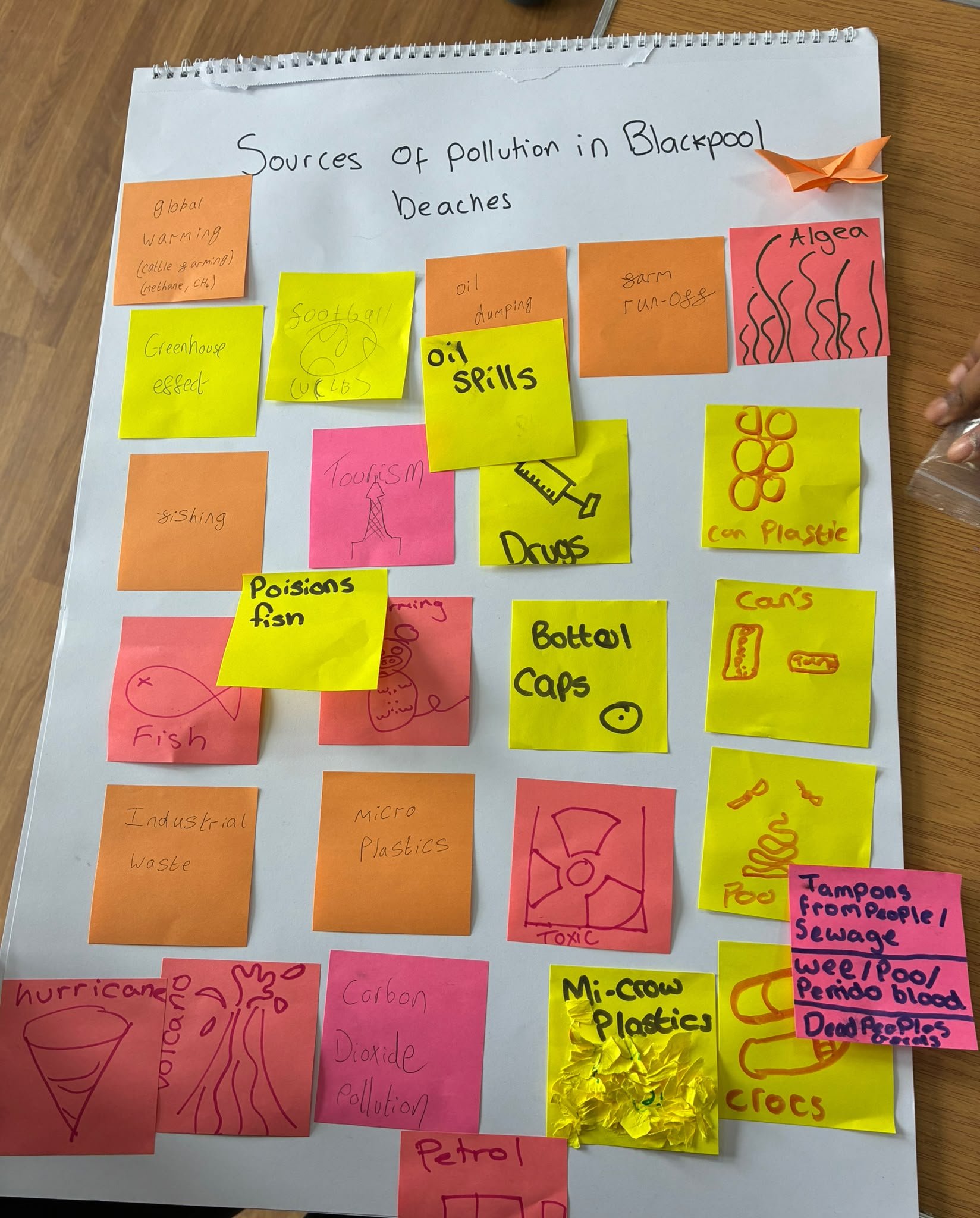
Discussions throughout the workshops revealed a strong sense of disappointment about the condition of Blackpool's beaches. Participants spoke about seeing litter, nappies, sanitary products, faeces and other waste in the sea, which had negatively affected their perception of the coastline. This was reflected during the sampling activity, where many were reluctant to enter the water.
Prior to the workshops, there had been recent sewage discharges in the area. However, conversations with participants suggested there was limited awareness of where to find information about pollution incidents and sewage alerts. As a result, many residents were not actively monitoring when alerts were in place. The introduction of digital signage displaying real-time tide information and pollution alerts was identified as a potential solution and a priority for local residents.
Many participants also asked basic questions about climate change and its relevance to their lives, highlighting a need for greater environmental education and awareness. Participants expressed a desire not only to understand environmental issues but also to learn practical ways of taking action. Providing opportunities for meaningful participation can help build a sense of agency while reducing feelings of climate anxiety.
By combining scientific research, environmental education and community discussion, these workshops encouraged young people to engage in citizen science and advocacy, empowering them to play an active role in protecting Blackpool's marine environment.