
Communicating Climate Change Without the "C Word"'
On the 22nd October, Maya (Climate Co-research Coordinator) attended 'Communicating Climate Change Without the "C Word"’, an event organised by NHS Leadership Academy North West and delivered by climate communicator Leena Norms. These are Maya's reflections from the session!
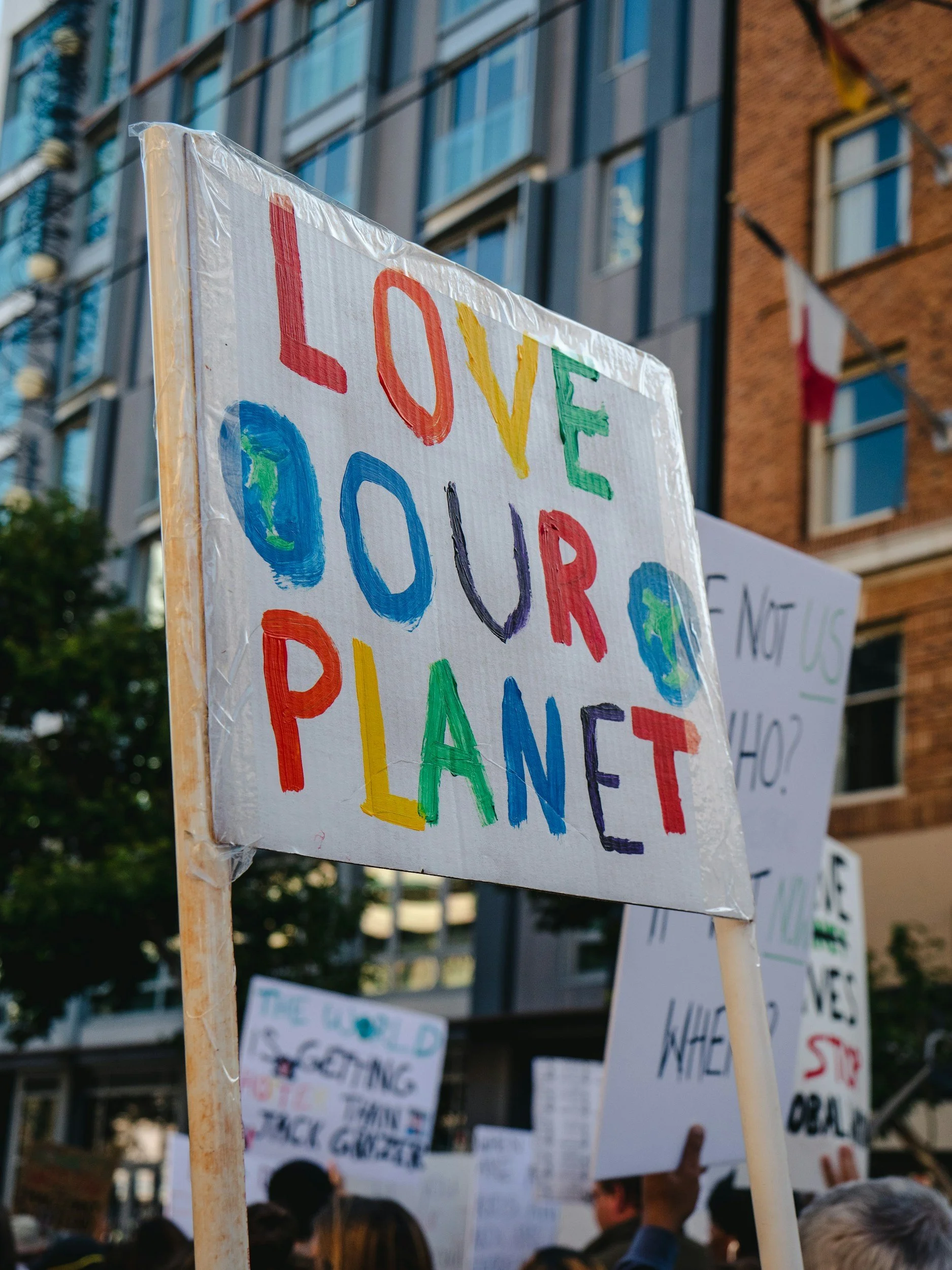
Sign reading ‘Love our planet’
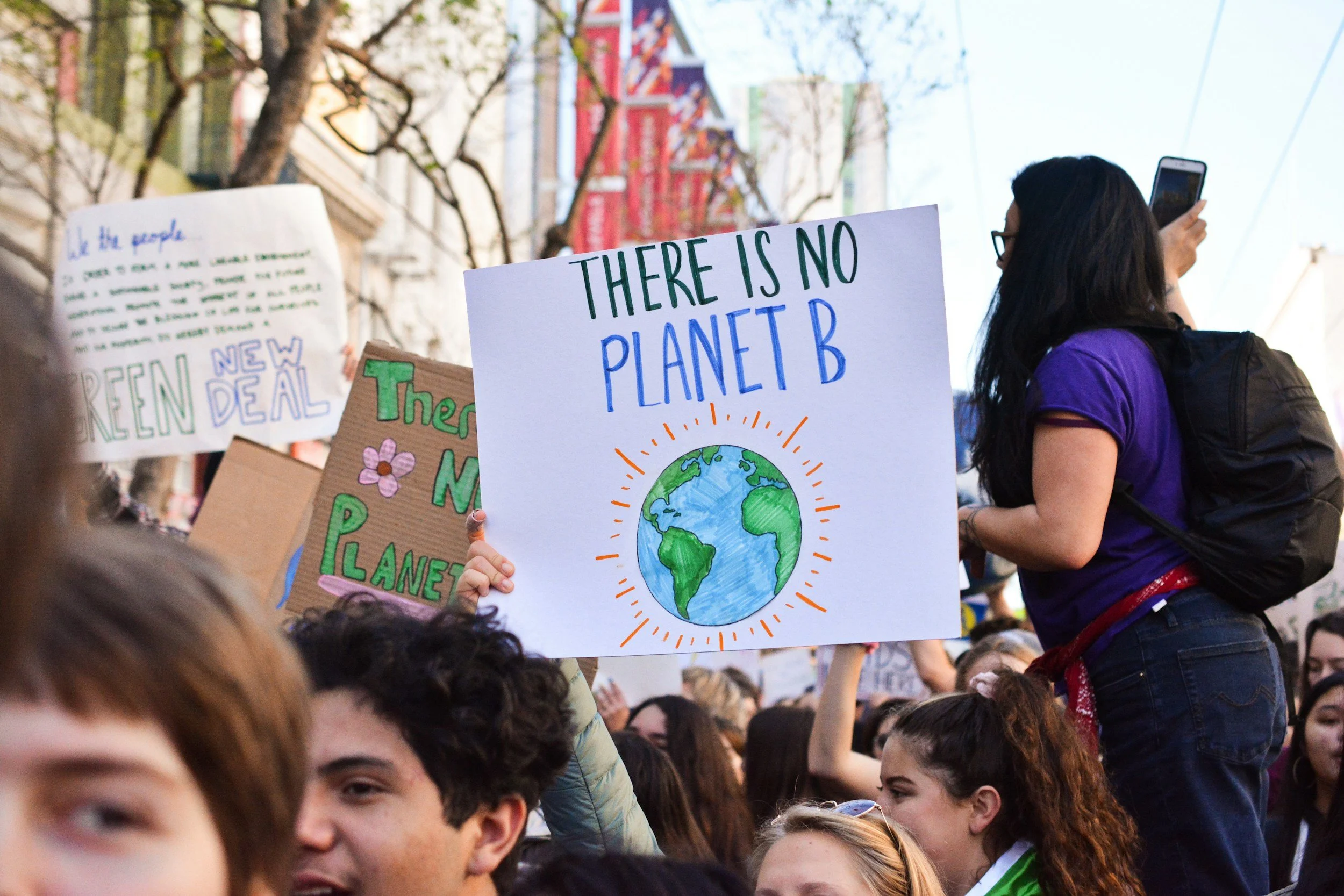
Sign reading ‘There is no Planet B’
The event was designed as a bootcamp to learn how to communicate messages about climate change, especially with people who are not already engaged in these topics.
One of my key takeaways was that I hadn't previously considered how some interpretations of the term 'climate anxiety' can imply that experiencing anxiety about climate change is a disproportionate reaction, when in reality climate change is a real threat that people are responding to. Thinking about this perspective allowed me to explore different ways to frame climate anxiety, which is particularly relevant to our current work on understanding young people's feelings about climate change as part of the 'Youth Empowerment for Local Climate Action in Blackpool' project.
During the session there were also crucial links made between climate change and health, with climate change framed as a health emergency and significant global health threat. The analogy of 'would you call an ambulance for the planet?' allowed me to consider what constitutes an emergency through a health lens and then apply the same criteria to the climate crisis.
I found the framing of climate change as a 'crisis of communication' to be a useful way to understand the challenges in conveying climate messaging to a wider audience. This was very interesting to me as I hadn't heard any labels to refer to the specific issue of communication on climate issues before. I also found it helpful to think about linking conversations to the things that people care about, to help them understand what they will lose if climate change worsens.
We were introduced to the 'rule of 7' in relation to climate discussions, which theorises that a person may need to hear a message seven times before they take action - meaning that even if a single conversation doesn't result in someone taking action, it could be one of seven interactions that eventually result in change. We were encouraged to be prepared to 'plant a seed' and not see it emerge, which I think will help me to maintain motivation if I don't always see immediate, tangible outcomes after engaging in climate discussions.
I was grateful for the opportunity to broaden my understanding of how to communicate with people on climate topics, and to network with others during the session. I hope to apply what I have learned from this event to future climate action work within Boingboing Foundation, to engage with more members of the community.